




How to Choose the Perfect Food Scissors: A Kitchen Essential Guide
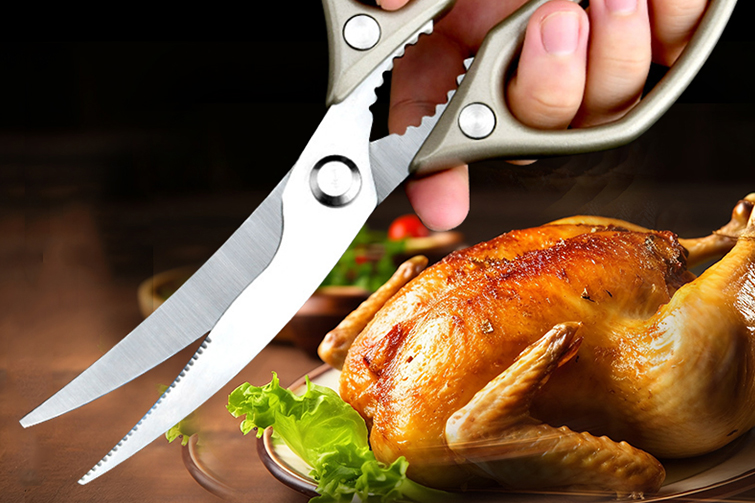
While a good chef's knife often gets the spotlight, a reliable pair of food scissors—or kitchen shears—is arguably one of the most versatile and hardworking tools in the kitchen. They are not just for cutting open packages; modern food scissors can break down a chicken, snip fresh herbs, trim bacon, and even crack nuts. However, with so many options available, how do you choose the right pair? Here is your essential guide to selecting the perfect food scissors for your culinary needs.
Why You Need Dedicated Food Scissors
First, it’s important to understand that food scissors are different from the office scissors in your drawer. They are designed specifically to handle food-grade tasks and are built to withstand the rigors of the kitchen, including exposure to moisture, acids, and bacteria.
1. Look for Detachable Blades for Easy Cleaning (Hygiene is Key)
This is arguably the most important feature. Because you will be cutting raw meat, poultry, and fish, your scissors must be thoroughly cleanable.
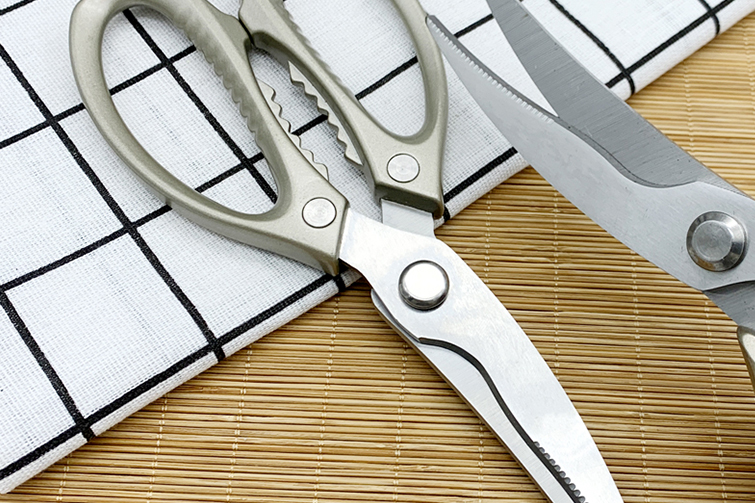
- The Feature: Look for shears that "break apart" or have a hinge that allows the two halves to separate.
- Why it matters: This prevents bacteria from getting trapped in the rivet. It allows you to scrub every surface by hand or, if the manufacturer allows, place them in the dishwasher. If you cannot fully clean the hinge, you risk cross-contamination in your kitchen.
2. Blade Material and Composition
Since these scissors will be in contact with food and moisture, the material is critical.
- High-Carbon Stainless Steel: This is the gold standard. It resists rust and corrosion far better than standard stainless steel and holds a sharp edge for a long time. This is essential for clean cuts through bone or sinew without shredding the meat.
- Titanium or Non-Stick Coatings: Many high-end kitchen shears feature a titanium or non-stick coating.Benefits: This reduces friction, making it easier to cut through sticky items like dried fruit or raw chicken skin. It also adds a layer of protection against rust and makes cleaning effortless—food residue simply wipes off.
3. Assess the Blade Design and Functionality
Food scissors often have unique blade features that multi-task.
- Micro-Serrated Edges: One blade often has a serrated or micro-serrated edge. This grips the food, preventing slippery items (like chicken skin or fish) from sliding out as you cut.
- Notches for Bones: Look for a small, serrated notch near the base of the blades (the pivot point). This is a "bone crack" notch designed specifically to grip and cut through poultry bones and lobster shells without damaging the main cutting edge.
- Bottle Opener: Many kitchen shears integrate a bottle opener into the handle or the base of the blades—a handy feature for casual cooking.
4. Consider Multi-Purpose Built-In Tools
Modern kitchen shears are often designed as multi-tools to replace other gadgets and save drawer space.
- Jar Opener: Some handles are designed to grip stubborn twist-off lids.
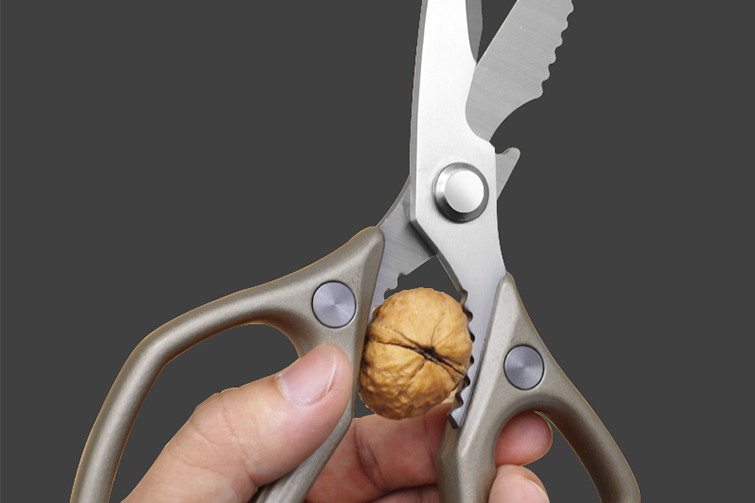
- Nut Cracker: There may be a curved indentation between the handles designed to crack the shells of nuts like walnuts.
- Herb Stripper: Some high-end models include holes in the blade to strip tender herb leaves (like thyme or rosemary) from their stems.
5. Handle Comfort and Grip
Cutting through a chicken or a bunch of kale requires hand strength. Comfort is essential to avoid fatigue.
- Ergonomics: Choose handles with a soft-touch, non-slip grip. They should feel balanced in your hand—not too heavy in the blades and not too bulky in the handles.
- Finger Guard: Look for a small guard or lip where the handle meets the blade. This prevents your fingers from sliding forward onto the sharp edge while applying pressure.
- Spring-Loading: Some shears have a spring between the handles that automatically opens them after you squeeze. This reduces hand strain significantly if you are doing a lot of repetitive cutting.
6. Safety and Storage
Because kitchen shears are sharp and often left on the counter, safety is a consideration.
- Locking Mechanism: A good pair of kitchen shears should have a sturdy locking tab to keep the blades closed when not in use. This protects your hands when you reach into a drawer and protects the blades from getting dinged up.
- Sheath: Some come with a protective blade cover, which is great for storage and maintaining sharpness.
How to Use and Maintain Them
Once you have the perfect pair, keep them in top shape:
- Disassemble and Wash: After cutting raw meat, immediately separate the halves and wash them in hot, soapy water (or the dishwasher if safe).
- Dry Immediately: Even with stainless steel, drying them right away prevents water spots and potential rust.
- Sharpen Occasionally: When they feel dull, you can sharpen them with a sharpening stone or use a specialized scissor sharpener. Do not use them to cut bones if they are not designed for it, as this will dull them quickly.
Final Verdict
Choosing the right food scissors is about balancing hygiene, durability, and versatility. Invest in a pair that comes apart for cleaning, is made of high-carbon stainless steel, and feels comfortable in your hand. A quality pair of kitchen shears will last for years and become the tool you reach for almost as often as your favorite knife.